|
 |
 |
|
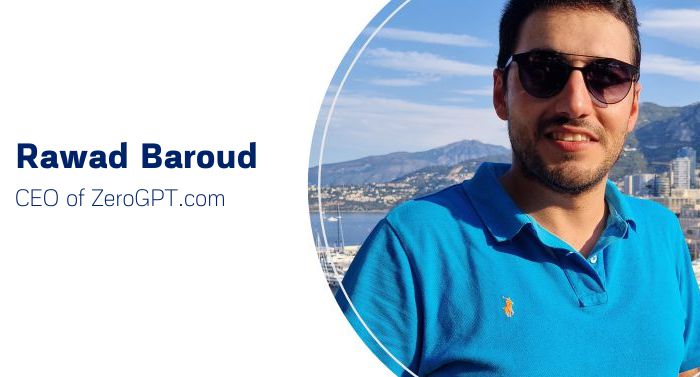
RAWAD BAROUD, CEO OF ZEROGPT.COM
June 26, 2026
For years, most people talked about technology as something companies adopted and employees adapted to. A new platform arrived, a new workflow followed and everyone learned enough to keep up. AI changes that pattern because it is not only another tool sitting inside the business. It is becoming part of how people think, learn, write, decide, search and communicate. That makes the current AI shift bigger than a software upgrade. The real breakthrough is not that technology can now produce more output, faster. It is that people can use AI to clarify their own thinking, test ideas earlier and move from uncertainty to action with less friction. In that sense, AI and tech are becoming human skills, not just technical systems, and the people who benefit most will not always be the most technical. They will be the ones who know how to ask better questions.
AI And Tech Are Becoming Human Skills, Not Just Business Tools
For years, most people talked about technology as something companies adopted and employees adapted to. A new platform arrived, a new workflow followed and everyone learned enough to keep up. AI changes that pattern because it is not only another tool sitting inside the business. It is becoming part of how people think, learn, write, decide, search and communicate. That makes the current AI shift bigger than a software upgrade. The real breakthrough is not that technology can now produce more output, faster. It is that people can use AI to clarify their own thinking, test ideas earlier and move from uncertainty to action with less friction. In that sense, AI and tech are becoming human skills, not just technical systems, and the people who benefit most will not always be the most technical. They will be the ones who know how to ask better questions.
The Shift From Using Tools To Thinking With Them
Traditional technology usually required people to learn the system before they could get value from it. You had to understand the menu, the commands, the settings and the process. AI feels different because the interface is often a conversation, and that lowers the barrier for people who do not think of themselves as technical. A student can ask for help understanding a difficult concept, a founder can test a positioning idea, a parent can plan a complicated week and a professional can turn rough thoughts into a clearer first draft. The important point is not that AI gives perfect answers. It does not. The important point is that it gives people something to react to, refine and question. That changes the relationship between humans and technology because the tool is no longer just waiting for instructions. It can help shape the next question.
Prompt Literacy Is Becoming A Practical Life Skill
As AI becomes more common, prompt literacy will matter because it teaches people to express what they want with more clarity. A weak prompt often reflects a weak goal. A better prompt forces the person to define the audience, the context, the desired outcome and the constraints. That habit has value far beyond AI. It improves communication, decision-making and planning because people start to notice what is missing from their own thinking. Instead of asking, «Write this for me,» a stronger user might say, «Help me explain this idea to a nontechnical audience, keep the tone practical and show me where the argument feels weak.» That kind of prompting is not about tricks or formulas. It is about learning to frame problems well enough that technology can become useful. In the near future, the divide will not only be between people who have access to AI and people who do not. It will be between people who know how to guide it and people who only accept the first answer.
The Best Use Of AI Is Not Always Speed
Many conversations about AI focus on productivity, and that makes sense because faster drafting, research and analysis are easy benefits to understand. But speed is only one part of the story, and it may not be the most meaningful one. The more interesting use of AI is personal clarity. When someone is unsure how to approach a problem, AI can help separate facts from assumptions, compare options and reveal blind spots. A manager can use it to prepare for a difficult conversation, a student can use it to understand why they are stuck and a creator can use it to explore different angles before choosing one. In each case, the value is not simply that the task gets done faster. The value is that the person thinks through the task more deliberately. Used well, AI becomes less like a shortcut and more like a mirror that helps people see their own ideas with more structure.
Human Judgment Still Has To Lead
A positive view of AI does not mean pretending the risks are small. AI can be wrong, biased, outdated, overconfident or too generic. It can also make weak thinking look polished, which may be one of the most underestimated risks. That is why human judgment has to remain the center of the process. People should learn to ask where an answer came from, what might be missing, what a skeptic would challenge and whether the result fits the real-world context. In some cases, an AI detector can also support trust by helping people evaluate whether content may have been machine-generated, but it should be used as one signal rather than a replacement for careful review. This is especially important as AI enters education, hiring, healthcare, law, media and daily decision-making. The goal should not be blind trust or automatic rejection. The better approach is active use with active judgment, where AI helps people move faster but humans still decide what is true, useful and responsible.
The Future Belongs To Better Human Technology Habits
The next phase of AI and tech will not be defined only by bigger models, faster chips or more advanced platforms. Those things matter, but they are not the whole story. The deeper shift will come from how ordinary people build better habits around technology. Do they use AI to avoid thinking, or to think more clearly? Do they accept the first response, or do they refine it? Do they use tech to create more noise, or to make better decisions with less confusion? These questions will shape the real impact of AI in business and daily life. The most successful people will not treat AI as magic and they will not treat it as a threat to avoid. They will treat it as a powerful thinking partner that rewards clarity, curiosity and judgment. In the end, the future of AI will depend less on what the technology can do by itself and more on what it helps humans become better at doing.
|